
Now Reading: Where Water Steals Childhood, Lumbie Mlambo Returns Time
-
01
Where Water Steals Childhood, Lumbie Mlambo Returns Time
Where Water Steals Childhood, Lumbie Mlambo Returns Time

Images: Courtesy of JB Dondolo
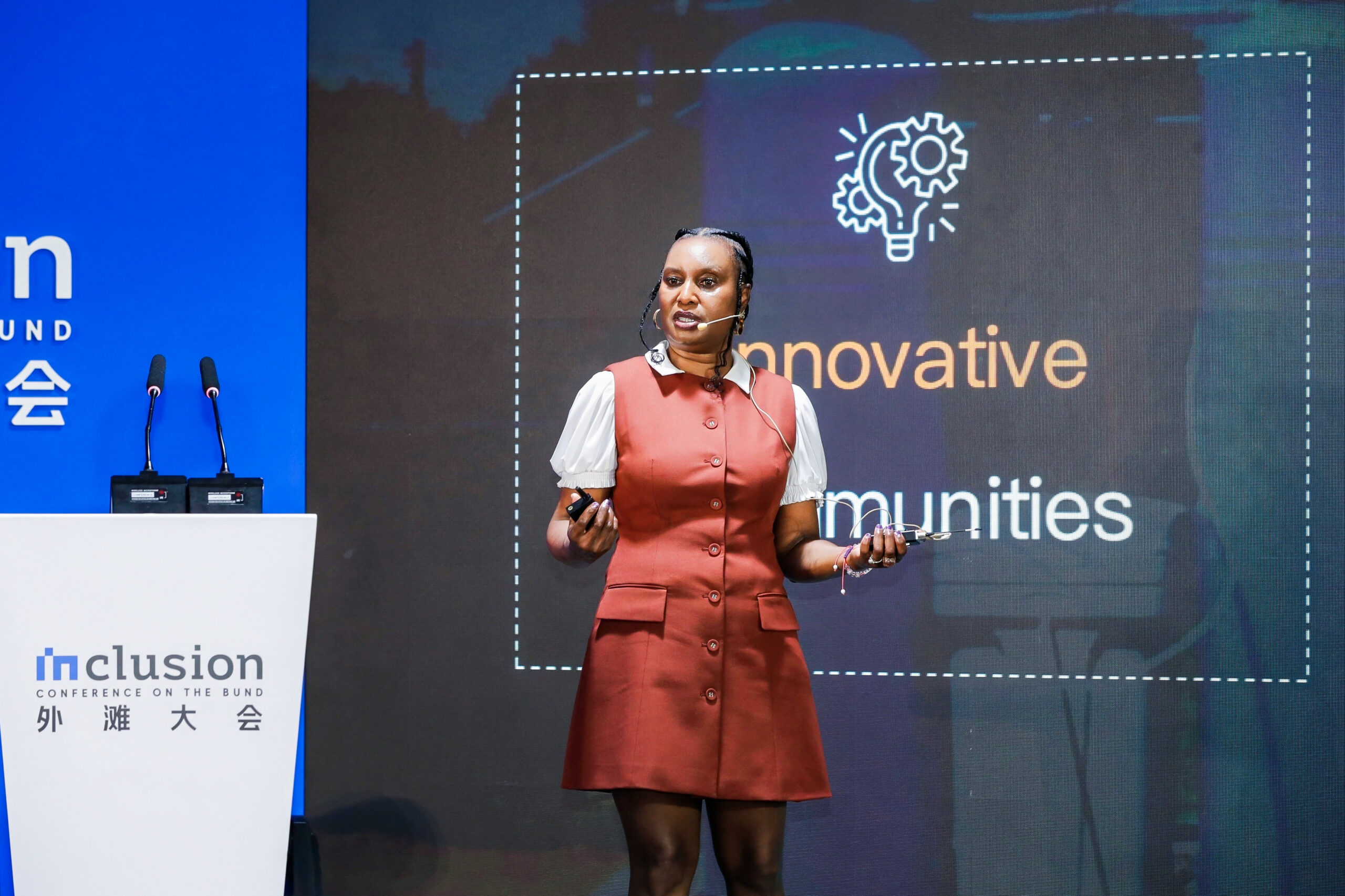
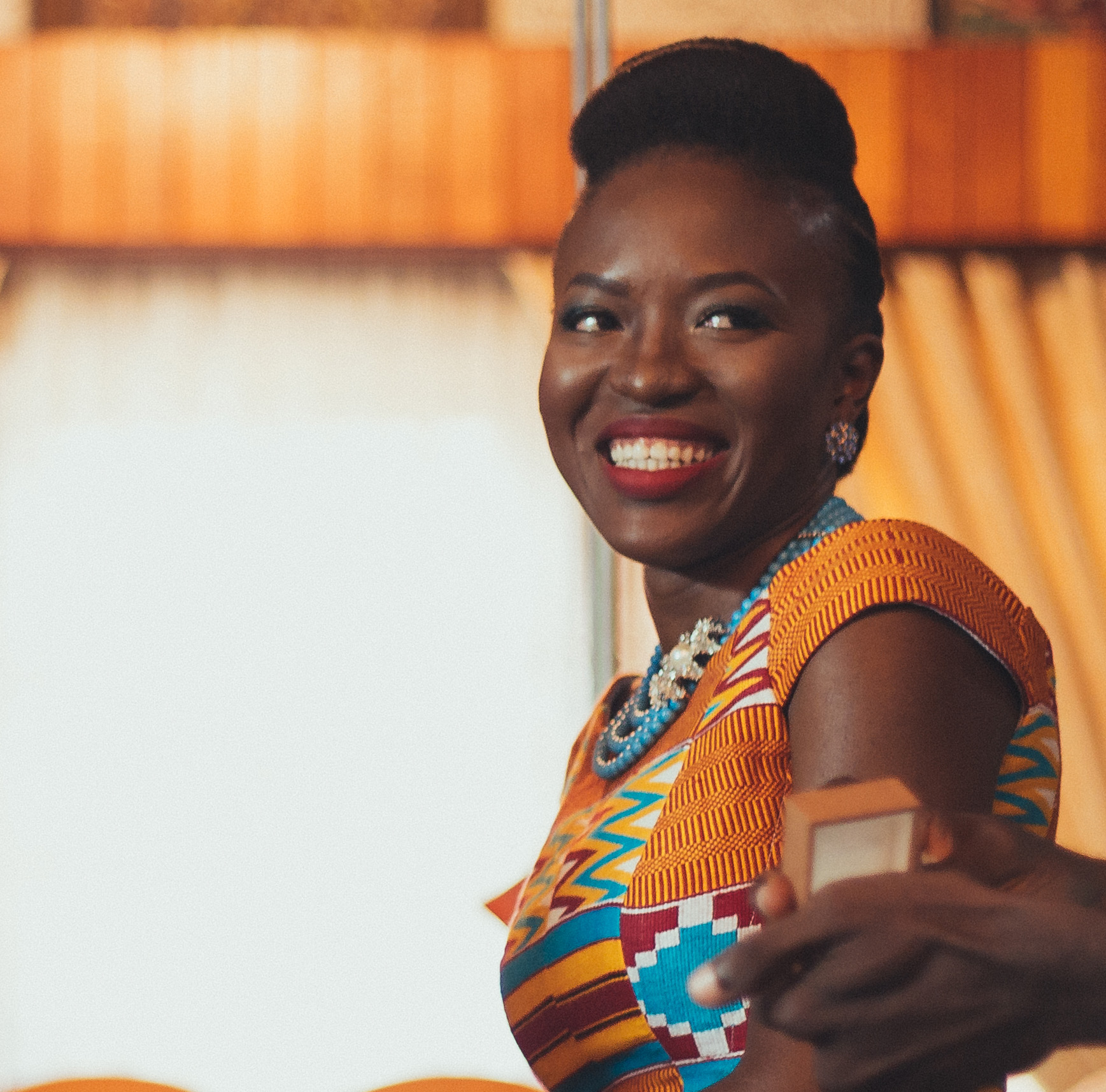
On some of the most unforgiving roads in southern Africa, where rock and dust stretch endlessly and tyres slip against terrain that barely deserves the name “road”, Lumbie Mlambo keeps going. She does not arrive with spectacle or self-importance. She arrives with engineers, solar panels, drilling teams and an insistence that women should not have to walk half their lives away in search of water. There is something quietly defiant about her presence in those places. She is a global award-winning humanitarian, yes, but she still introduces herself first as a daughter, a mother, and, in her own words, “a goofy person who likes to make people laugh.” It is that disarming humility, paired with an unshakeable resolve, that defines both the woman and the movement she leads.
Lumbie was born in Zimbabwe in February, a month she loves not only because it marks her birthday, but because it celebrates women. Although she largely grew up in the United States, she has never loosened her grip on her African identity. “If I wanted to change my accent, I could,” she says plainly. “But I value who I am. I am proud of who I am.” That pride is neither loud nor defensive; it is rooted in the values instilled by her parents, particularly her father, JB Dondolo, whose name she would later give to the organisation she founded.
Her father never went to school. Orphaned at a young age, he raised his siblings before he had fully grown into himself. He moved between Zimbabwe and South Africa in search of work and stability, absorbing languages and cultures along the way. When he married Lumbie’s mother, an educator, she taught him how to read and write. The day he learned to write, he began composing letters, letters seeking help for communities, letters advocating for education, letters describing need. “He could never stop writing,” Lumbie remembers. “He became a storyteller and an advocate.” Their home was open to children who were not biologically theirs yet were treated as such. “There was no cousin,” she laughs. “Everyone was brother or sister.” Ubuntu was not theory in that household; it was lived reality.
When her father died in 2002 at the age of eighty-nine, he left behind more than memories. He left unfinished work. Lumbie did not immediately see herself as the one who would carry it forward. In fact, she is candid about her doubts. “If you had told me when I was young that I would be doing this, I would have said never,” she says. “I quit internally a thousand times.” The doubts were not dramatic but persistent, the quiet voice that asks whether one is truly capable. She underestimated herself more than once, but she did one decisive thing: she named the organisation after her father. “Every time I felt like giving up, I would look at the name and say, ‘Why would you give up on you? Why would you give up on your father?’”
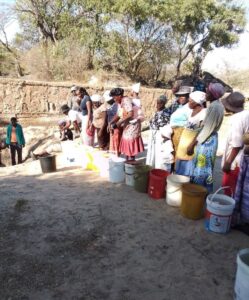 Today, as Founder and CEO of JB Dondolo, she leads clean water initiatives across Zimbabwe, South Africa, Nigeria, Cameroon and in parts of the United States including the Navajo Nation and Skid Row in California. The scale is significant, over 120,000 people impacted in southern Africa alone, but the statistics do not capture the human cost of water scarcity. In some of the communities she serves, women and girls walk up to eighteen miles a day to fetch water. Nine miles out, nine miles back, carrying multiple buckets. “When do they live?” she asks, her voice softening. “If you are walking all day for water, when do you go to school? When do you build something for yourself?”
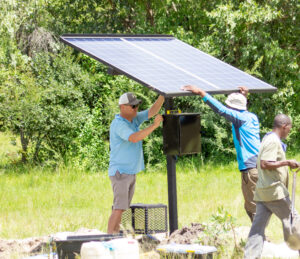
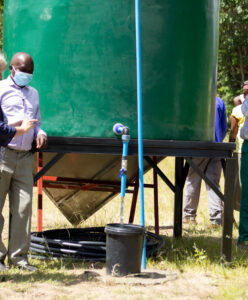
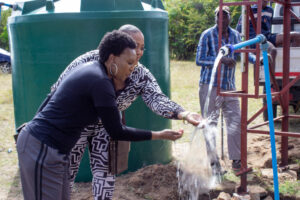
Her work is infrastructural, not symbolic. Where underground water exists, boreholes are drilled and fitted with solar-powered pump systems and storage tanks. Where water is available above ground, filtration systems are installed. In areas where neither option is viable, she and her team are developing Climate H2O, a technology designed to generate water from atmospheric moisture and capture rainwater, powered by solar energy. She speaks of artificial intelligence and innovation not as buzzwords, but as necessary tools. “If we don’t harness technology, we’ll be left behind,” she says. “We can do more. We must do more.”
There is an emotional weight to this work that she does not romanticise. The terrain is dangerous, sometimes remote enough that wildlife poses real risk. Funding is inconsistent and as a woman of colour leading a global nonprofit, she is acutely aware of structural inequities in access to capital. Communities sometimes express frustration when projects are delayed. “They say we don’t get there fast enough,” she admits. “And sometimes they’re right.” Yet her response is not defensiveness, but persistence. “We don’t have time to deliberate,” she says. “We have time to act.”

For Lumbie, empathy is strategy. “I imagine it was me,” she says when asked how she protects herself from burnout. “Would I want someone to give up on me?” That question becomes a compass. It prevents detachment and also prevents saviour narratives. She does not see herself as a rescuer, but as a participant in shared humanity. Her leadership style mirrors that belief. “Yes, I lead,” she says. “But anybody can lead. Maybe even better than me.” She keeps her door open to criticism, seeing it as constructive rather than threatening. Power, in her view, is not hoarded but distributed.
In recent years, she has expanded her advocacy through unexpected channels. Through an initiative called Music for Water, songs such as We Are the Leaders for Clean Water have reached global platforms and even Grammy consideration. “Who wants to hear about water?” she laughs. “But if you dance first, then you listen.” The strategy is as practical as her engineering: meet people where they are, then move them toward awareness.
She has also launched Project Lydia Sander – She Elevates, named after her mother, focusing on mentoring young women in resilience, dignity and self-worth. “You are good enough,” she says firmly. “Never underestimate the power that you have. Start somewhere.” The message is consistent whether she is speaking to a rural community, a university hall, or a young woman doubting her voice.
Despite receiving honours including a UN Global Leadership Award and recognition as Africa’s Philanthropist of the Year by CNBC Africa, what she treasures most is simpler. “My parents,” she says without hesitation. “The values they instilled in me. I live those values every day.” If she could speak to her eight-year-old self, she would offer reassurance rather than ambition. “Don’t let what people say about you define you,” she says. “What they say out of jealousy is not who you are. You are becoming something bigger.”
In communities where girls once spent their days walking for water, taps now stand closer to home. The change is not loud, but it is transformative. Time is returned, school attendance increases and dignity is restored. Lumbie Mlambo does not frame this as heroism. She frames it as responsibility. In her world, water is not charity, it is justice and justice, she reminds us gently but firmly, is work that must be done on the ground, step by step, even on roads that barely exist.
Connect with Lumbie Mlambo
Website: www.jbdondolo.org
Social Media: @LumbieMlambo










Related Posts

Stay Informed With the Latest & Most Important News
Previous Post
Next Post









Advertisement